
Change and transformation is a team sport. Understanding the way teams work, and how to get them to perform for change is central to effectiveness.
Work out loud


Working out loud is the art of talking about what you are doing as you are doing it. It’s not just about shouting about successes. It’s about showing your working like your maths teacher told you to do.
It’s something that I have done instinctively over many years, and you can see that through things like the history of how the cards came into existence, or my weekly Weeknotes habit.
If you want an authoritative text on the subject, the best first step is John Stepper’s book Working Out Loud.
John’s done a Ted Talk here:
Diversify your network



Many of us have a tendency to only build relationships with people who are either in our field or our organisation, and with those with who we see a need in the short term. By extending who we know in different directions we gain access to a broader range of experiences and perspectives.
There have been many ways in which my thinking has been influenced in this. As a social scientist working in the world of technology I’ve generally felt something of an outsider, so there has been a necessity to build relationships with people outside of my sphere.
I’ve also thought for many years that much of my ability to deliver in organisations comes from being a generalist, “comb-shaped” with a level of understanding across different disciplines.
Julia Hobsbawm’s remarkable Names Not Numbers events were a very practical exploration of diverse networking.
Scott Page’s The Difference was the first time I heard a coherent argument for the importance of diversity in teams over and above ethical and moral reasons – put simply, it delivers better results.
Play in teams
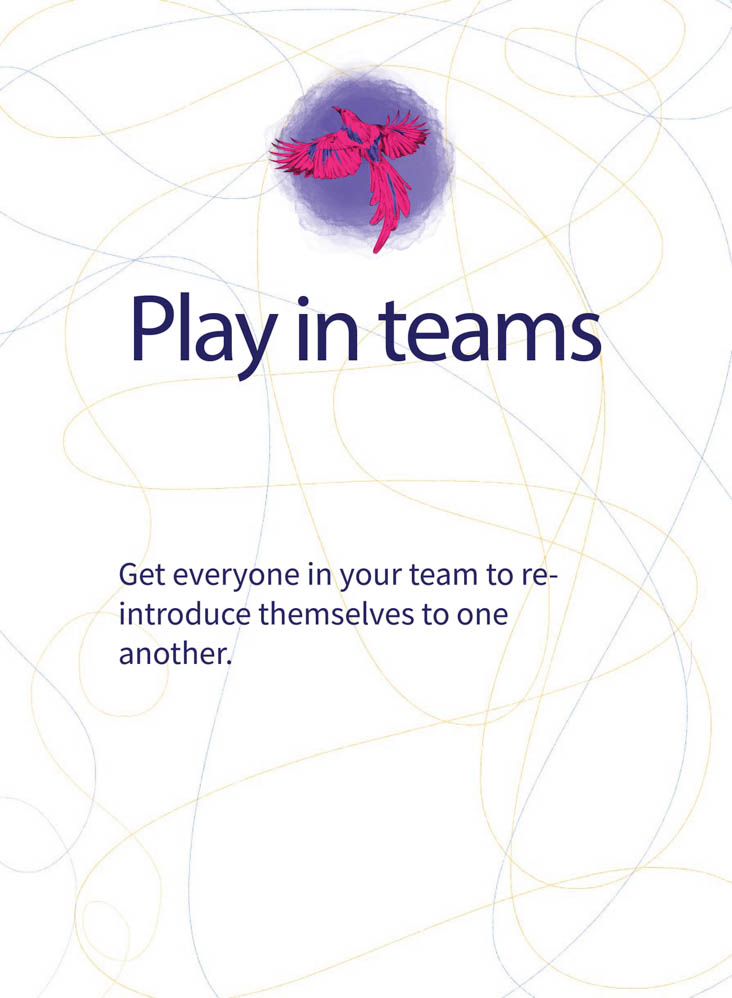
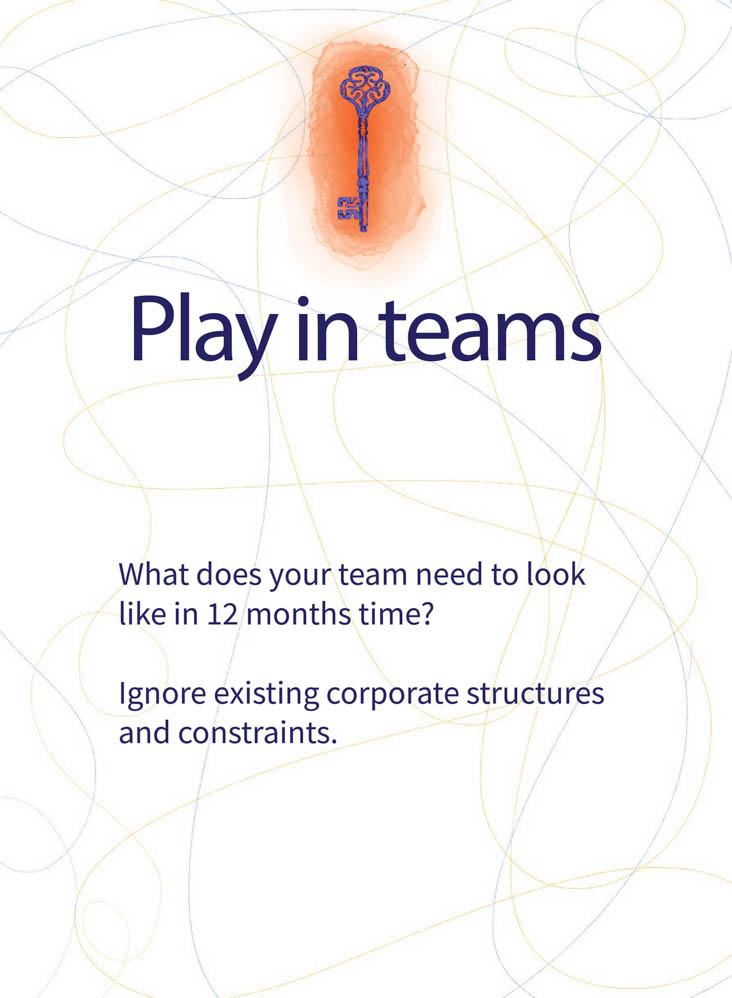

Modern organisations are complex, and often people aren’t entirely sure about which teams they are in, let alone how those teams are shaped and what needs they have. To get change to happen effectively we need to learn how to build effective teams.
I spent much of the 2010s investigating collaboration in teams within organisations, and in particular the impact of technology. My report Who Shares Wins for Leading Edge Forum, and subsequent work with the UK Government Cabinet Office as part of the Better Information for Better Government programme led to this one-page, hand-drawn distillation of my observations.
Morten Hansen’s book Collaboration was a big influence on my thinking in this space, as was this somewhat obscure paper by some researchers at IBM.
 the home of PlayCards